

Welding fixtures and electrodes - Effective components for the welding process
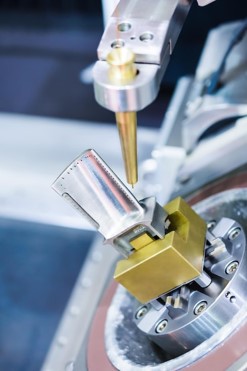
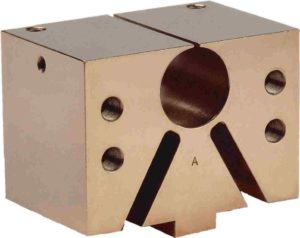
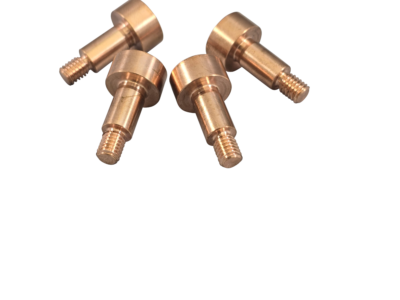
In welding technology, particularly in resistance welding, ALBROMET copper alloys stand out above all for their high electrical conductivity and resistance to wear. Components made from these materials ensure greater quality and efficiency in the welding process. Thanks to their excellent machinability, ALBROMET copper alloys and aluminium bronzes can be used to manufacture not only simple but also highly complex components in accordance with your drawings.
Aluminium bronzes and copper alloys are frequently used in welding nozzles, welding jaws or welding fixtures that come into contact with welding spatter. The high thermal conductivity of these alloys allows the weld spatter to cool quickly and thus roll off. The high hardness of the aluminum bronze reduces the formation of adhesion points (e.g. due to abrasion). This prevents the mechanical adhesion of welding spatter. Copper can also repel weld spatter well, but has the disadvantage of lower hardness and mechanical stability, which means that it wears out more quickly in abrasive or repeated welding processes. The surface of aluminium bronze is chemically stable against metal splashes, as it forms special oxide layers that minimize adhesion. In addition, aluminum bronze retains its strength better than pure copper, even at high temperatures.
The high resistance to mechanical wear and the lack of sparking of the copper alloy are ideal prerequisites for use as electrodes in resistance welding and laser welding. Some commonly used alloys for this purpose are beryllium-copper and beryllium-free copper alloys. Both offer a very good combination of hardness, conductivity and corrosion resistance.
Your advantages
- High electrical conductivity
- High thermal conductivity
- Long service life
- Good machinability for tight tolerances
- Product and development work
- No welding spatter adhesion
- High softening temperature (approx. 500 degrees Celsius)
Examples of components in welding technology
- Welding electrodes
- Electrode holder
- Clamping elements
- Welding fixtures and welding jaws
- Heat sinks in welding equipment
- Welding mirror
- Laser welding nozzles
- Tempering elements
- Power bracket
Get in touch with us!
We will advise you competently and personally.


